
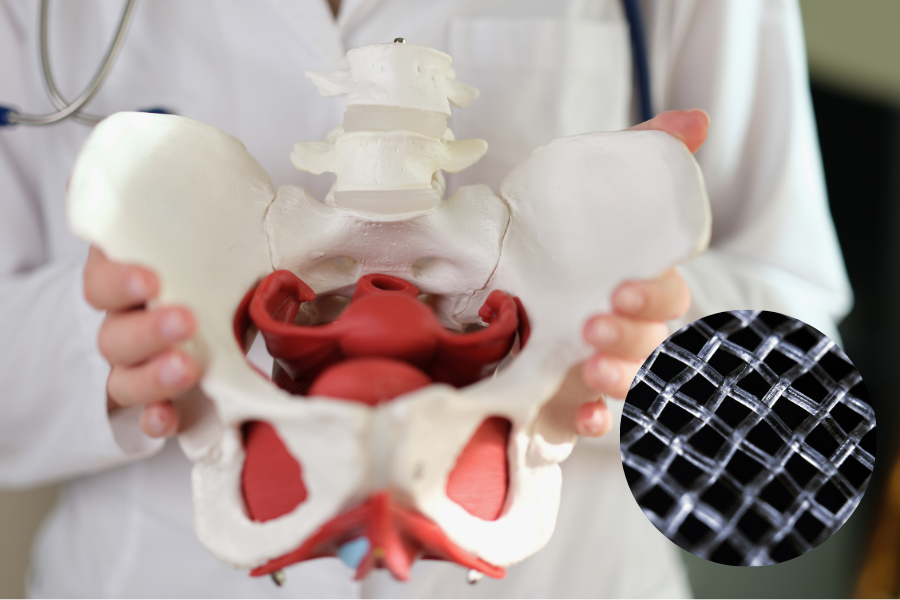
I am a urogynecologist, and in my practice, I frequently see patients referred for pelvic pain and urinary symptoms after vaginal mesh placement. Many of these women had mesh placed years earlier for vaginal prolapse or stress urinary incontinence and were doing well initially, but gradually developed symptoms they could not explain. Over time, they began to experience pain, sometimes unpredictable, sometimes specifically during intercourse, occasional vaginal bleeding, or symptoms that were not present before surgery. In a number of cases, the mesh had eroded into the vaginal tissue and was the clear source of their complaints.
Persistent pelvic pain, recurrent infections, unexplained vaginal bleeding, especially with penetration, or difficulty urinating after vaginal mesh placement are not normal, even when symptoms appear soon after surgery or months or years later. I often meet patients who were told to wait, reassured that nothing was wrong, or made to feel that these symptoms were simply something they had to live with. As a urogynecologist, I am very familiar with mesh usage and have significant experience detecting and treating mesh-related problems.
Vaginal mesh is commonly used to treat pelvic organ prolapse and stress urinary incontinence. Its use for prolapse and stress incontinence is common and, in selected cases, has been considered a standard or effective treatment option. Complications may include erosion into the vagina, chronic pain, infection, unexplained vaginal bleeding, or obstruction of the urinary tract. When this occurs, mesh removal may be necessary to restore comfort and function. In my experience, deciding whether to remove mesh and how much to remove requires individualized clinical judgment rather than a standardized approach.
Vaginal mesh is a synthetic material placed to support pelvic organs such as the bladder, urethra, or uterus. The mesh acts as a scaffold that allows the body to form connective tissue around it, creating support for the prolapsed organ. In some patients, this process is effective and stable. In others, the mesh can tighten, migrate, or erode through surrounding tissue, leading to pain, inflammation, sexual discomfort, or urinary symptoms. I commonly see patients whose pain occurs intermittently at first, then progresses, often becoming more noticeable during intercourse.
RELATED: Pelvic Floor Disorder Symptoms in Women
Not every patient with mesh requires removal, but ongoing or worsening symptoms should not be dismissed and should be investigated, especially when they begin after mesh placement. Symptoms that warrant evaluation include persistent pelvic pain, abnormal vaginal discharge or bleeding, recurrent vaginal or urinary infections, difficulty initiating urination, incomplete bladder emptying, or pain with intercourse. A detailed and complete evaluation is needed to correctly diagnose the problem, including a thorough history, careful examination, and targeted testing to help determine whether symptoms are mesh-related and whether partial or complete removal is appropriate.
Mesh extrusion occurs when the mesh erodes through the vaginal tissue and becomes exposed. Patients may notice irritation, discharge, bleeding, or a sharp or rough sensation in the vagina, sometimes treated by physicians as a recurrent vaginal infection. Pain with intercourse is common. In my clinical experience, extrusion does not resolve on its own. Surgical removal of the exposed mesh is often necessary to prevent ongoing inflammation, infection, and further tissue damage.
In some cases, mesh becomes a chronic source of infection. Patients may experience pelvic pain, swelling, fever, or recurrent infections that respond only temporarily to antibiotics. When I see repeated infections in the setting of mesh, treating with antibiotics alone is rarely effective, even though it may provide short-term symptom relief. Mesh removal is often required to address the underlying cause rather than repeatedly treating symptoms.
FAQs:
Is pelvic pain normal after vaginal mesh surgery?
No. Persistent pelvic pain, pain with intercourse, bleeding, or urinary difficulty after mesh placement is not normal and should be evaluated.
What are common symptoms of mesh complications?
Symptoms may include pelvic pain, vaginal bleeding, recurrent infections, pain during intercourse, urinary obstruction, difficulty emptying the bladder, or abnormal vaginal discharge.
Can vaginal mesh cause urinary obstruction?
Yes. Mesh can tighten, migrate, or scar around the urethra or bladder, leading to difficulty urinating or incomplete bladder emptying.
Do all problematic meshes need to be removed?
Not always. Some patients benefit from partial mesh removal, while others require complete excision. The decision depends on symptoms, mesh location, and surrounding tissue involvement.
Can mesh erosion heal on its own?
No. Once mesh erodes or extrudes through vaginal tissue, it typically does not resolve on its own.
Why don’t antibiotics fix mesh-related infections?
Mesh can act as a foreign body that harbors bacteria. Antibiotics may provide temporary relief, but definitive removal requires mesh removal.
How long after surgery can mesh complications appear?
Symptoms can occur months or years after the original mesh placement.
Who should evaluate mesh-related pelvic pain?
Evaluation should be performed by a urogynecologist experienced in mesh removal and complications, as these cases require specialized expertise.
If you have symptoms that are not going away, our offices are located in Westwood and Glendale in Los Angeles, and we specialize in helping women navigate these exact complications. Book an appointment or reach us at 310 446 4440 and 818 265 9499 to discuss your history and find a path forward.